
Why Cluttered Kitchen Cabinets Are Holding You Back
You're likely wasting more time than you think searching for ingredients, utensils, and cookware in your cluttered kitchen cabinets, which are silently draining your productivity and increasing your stress levels. Cluttered cabinets lead to wasted time, wasted money, and wasted energy. You're probably frustrated, overwhelmed, and feeling like you're stuck in a never-ending cycle of clutter. But, the truth is, it's not just about cleaning out your cabinets – it's about creating a system that works for you, saves you time, and makes cooking a breeze. Get ready to open up your kitchen's full potential.
Key Takeaways
• Cluttered kitchen cabinets lead to wasted time searching for items, causing frustration and decreasing productivity in the kitchen.
• Disorganized cabinets make it difficult to find what you need, leading to duplicated purchases and unnecessary expenses.
• Inefficient storage solutions can result in expired or spoiled food, causing health risks and financial losses.
• Cluttered cabinets can also contribute to stress and anxiety, making meal preparation an overwhelming task.
• By organizing kitchen cabinets, you can free up mental and physical space, allowing you to focus on cooking and enjoying meals with ease.
Assessing Your Kitchen Cabinet Needs
To get started on organizing your kitchen cabinets, take stock of your current storage situation by asking yourself what you need to store, how often you use each item, and what type of cabinet space you have available. This assessment will help you identify your kitchen cabinet organization needs and create an efficient design that works for you.
Consider the types of items you need to store, such as cookware, dishes, utensils, and food. Think about how often you use each item and prioritize the most frequently used items. This will help you determine the best storage solutions for your kitchen cabinets.
Purge and Declutter Cabinet Contents
Sorting through your kitchen cabinet contents, you're likely to find a mix of essential items, duplicates, and forgotten relics that are cluttering your space and hindering your workflow. It's time to purge and declutter, getting rid of items that no longer serve a purpose or bring you joy. Be ruthless – if you haven't used it in the past year, it's probably safe to let it go.
Here are three key areas to focus on when purging your cabinet contents:
-
Expired or broken items: Get rid of expired food, broken appliances, or worn-out utensils that can't be salvaged.
-
Duplicates or triplicates: Keep only your favorite or most-used items, and consider donating the rest to those in need.
-
Unused or unnecessary items: Be honest with yourself – if you haven't used it in the past year, it's probably taking up valuable space that could be better utilized.
Categorize and Group Similar Items
With your kitchen cabinet contents purged and decluttered, you're left with a more manageable amount of items that now need to be categorized and grouped together based on their purpose, frequency of use, and storage requirements. This essential step will help you maximize your cabinet space and make the most of your kitchen's potential.
Start by organizing items by function, grouping similar items together, such as baking supplies, cooking utensils, and dinnerware. This will help you see what you have and where it should be stored.
Next, sort items by size, placing smaller items in front of larger ones to make sure easy access. This will also help you identify any duplicate items or those that are no longer needed.
By categorizing and grouping similar items, you'll be able to assign a specific place for each item, making it easier to find what you need when you need it. This will save you time, reduce stress, and make cooking and meal prep a breeze.
Assign a Home for Each Item
Now that you've categorized and grouped similar items, it's time to assign a home for each item in your kitchen cabinets.
You'll want to designate a specific spot for each item, categorize them by type, and store them by frequency of use to maximize efficiency.
Designate a Spot
Assign each kitchen item a designated position, and make sure it's easily accessible to make sure that everything has a logical place to return to after use. This vital step in kitchen organization guarantees that you'll never struggle to find what you need again.
By designating a position for each item, you'll maintain a sense of control and efficiency in your kitchen.
Here are three benefits of designating a position for each kitchen item:
-
Reduces Clutter: When everything has a designated position, clutter becomes a thing of the past. You'll no longer have to deal with countertops cluttered with appliances, utensils, and ingredients.
-
Saves Time: With designated positions, you'll save time searching for items. You'll know exactly where to find what you need, making cooking and meal prep a breeze.
-
Improves Storage Solutions: Designating a position for each item allows you to optimize your storage solutions. You'll be able to utilize your kitchen cabinets, drawers, and shelves more efficiently, making the most of the space you have.
Categorize by Type
You group similar kitchen items together by categorizing them by type, creating a sense of order and making it easier to find what you need when you need it. This decluttering tip is essential for effective kitchen organization.
By categorizing items like baking supplies, cooking utensils, and dinnerware, you'll be able to see what you have and where it belongs. This process helps you identify duplicates, broken items, and things you no longer need, making it easier to purge your kitchen of clutter.
Assign a home for each category, ensuring that similar items are stored together. For example, store all your baking supplies in one cabinet or on a specific shelf. This way, when you need a specific item, you'll know exactly where to find it.
Store by Frequency
Your kitchen cabinet storage system should prioritize items based on how frequently you use them, making sure that daily essentials are readily accessible and less-used items are relegated to harder-to-reach areas. This frequency organization approach enables you to maximize your storage space and streamline your cooking process.
By storing items based on frequency, you'll find that you're more efficient in the kitchen. You'll no longer have to dig through cluttered cabinets to find the one item you need. Instead, you'll be able to quickly grab what you need and get back to cooking.
Here are three benefits of storing items by frequency:
-
Reduced cooking time: With essential items easily accessible, you'll spend less time searching for what you need and more time cooking.
-
Increased productivity: By having the items you use most often front and center, you'll be more productive in the kitchen.
-
Efficient storage: Storing items by frequency makes sure that your cabinets are organized and clutter-free, making the most of your available storage space.
Utilize Vertical Storage Spaces
Maximizing the often-wasted space above your kitchen cabinets can greatly increase storage capacity by installing shelves, baskets, or hooks that hold infrequently used items. This is especially useful for items you don't use daily, like special occasion dishes or infrequently used cookbooks. By doing so, you'll free up valuable space in your main cabinets for everyday essentials.
You can also utilize the space on the back of a door by installing over the door organizers. These can hold spices, oils, or even cleaning supplies, keeping them organized and out of the way.
Hanging shelves are another great option, providing additional storage for items like pots, pans, or lids. By leveraging these vertical spaces, you'll create a more efficient kitchen that allows you to focus on cooking and entertaining, rather than digging through cluttered cabinets.
Choose the Right Storage Containers
When choosing the right storage containers for your kitchen cabinets, you'll want to optimize your shelf space by selecting containers that fit snugly together and make the most of every inch.
You'll also want to label and categorize items so you can easily find what you need, and keep similar items stored together.
Optimize Your Shelf Space
To make the most of your shelf space, select storage containers that are specifically designed to fit your kitchen cabinet's unique dimensions and layout. This will guarantee you're maximizing every inch of available space and creating a more efficient organization system. By choosing containers that fit snugly together, you'll reduce clutter and make it easier to find what you need when you need it.
Here are three key considerations to keep in mind when selecting storage containers:
-
Measure your shelves: Take precise measurements of your shelves to guarantee the containers you choose fit perfectly.
-
Think vertically: Use stackable containers to make the most of your cabinet's vertical space.
-
Choose multi-functional containers: Opt for containers that can serve multiple purposes, such as storing both dry goods and cookware.
Label and Categorize Items
Label and Categorize Items
By categorizing items into groups and labeling their corresponding storage containers, you'll create a system that's easy to navigate and maintain. This is where the magic of organization begins. Divide your kitchen items into functional zones, such as baking, cooking, and dining. Within each zone, group similar items together, like all baking supplies or cooking utensils.
| Zone | Category | Storage Container |
|---|---|---|
| Baking | Flour, sugar, baking powder | Airtight containers with labels |
| Cooking | Pots, pans, utensils | Stackable drawers with dividers |
| Dining | Plates, bowls, cups | Shelf dividers with labels |
| Cooking | Oils, spices, condiments | Turntable with baskets |
| Baking | Mixing bowls, measuring cups | Stackable containers with lids |
Use color coding to differentiate between zones and categories. For example, use blue labels for baking supplies and red labels for cooking utensils. This visual system will help you quickly find what you need, saving you time and reducing stress in the kitchen. By labeling and categorizing your items, you'll be able to maintain your newly organized kitchen with ease.
Maximize Corner Cabinet Space
You can access the full potential of your kitchen by making the most of the often-wasted space in corner cabinets. These cabinets are notorious for being difficult to navigate, but with the right solutions, you can turn them into a hub of efficiency.
To maximize corner cabinet space, consider the following:
-
Install a Lazy Susan: This rotating shelf allows you to easily access items in the back of the cabinet without having to dig through everything in front of them.
-
Use pull-out shelves: These shelves bring the contents of the cabinet to you, making it easy to find what you need without having to bend or stretch.
-
Opt for corner drawers or swing-out shelves: These solutions provide easy access to the entire cabinet, allowing you to make the most of the space.
Implement a Maintenance Routine
Establishing a regular maintenance routine helps keep your newly organized kitchen cabinets clutter-free and maintains they continue to function efficiently over time. By dedicating a few minutes each week, you'll guarantee your cabinets remain organized and prevent clutter from building up again.
Set aside a specific time each week, such as Sunday evening or Monday morning, to maintain your kitchen cabinets. During this time, go through your cabinets and remove any items that are no longer needed or are out of place. Put back items that have wandered out of their designated spaces. This simple routine will help you stay on top of clutter and keep your kitchen running smoothly.
Implementing this habit into your daily routine will also improve your time management skills, freeing up more time for cooking, socializing, or simply enjoying your newly organized kitchen.
Additionally, consider implementing some organizational tips, such as labeling your cabinet contents or using dividers to separate categories of items. By incorporating these habits into your maintenance routine, you'll be able to maintain your organized kitchen cabinets with ease, saving you time and stress in the long run.
Keep Frequently Used Items Accessible
When you're cooking, you don't want to waste time searching for essential items. By keeping frequently used items in easy-to-reach shelves and optimizing your cabinet space, you'll save time and reduce frustration.
Now, let's explore how to make this a reality in your kitchen.
Easy to Reach Shelves
Frequent use transforms kitchen staples into trusted allies, and assigning them a prominent place on easy-to-reach shelves keeps them at your fingertips, streamlining meal prep and cooking routines. This strategic shelf organization guarantees that the items you need most are always within arm's reach, saving you time and effort.
By reserving prime shelf real estate for your most-used items, you'll experience the benefits of:
-
Reduced clutter: Less frequently used items are relegated to harder-to-reach shelves, keeping your main workspace clear and organized.
-
Improved space efficiency: Easy-to-reach shelves maximize storage capacity, allowing you to fit more essentials in a smaller area.
-
Enhanced convenience: With your go-to items readily available, you can focus on cooking rather than searching for what you need.
Optimize Your Cabinet Space
You can maximize your cabinet's storage potential by allocating the most accessible areas to your daily essentials, ensuring that every inch counts in your kitchen. This means reserving the top shelves for frequently used items like plates, bowls, and cups, and designating lower shelves for less-used items like special occasion dishes or cookbooks. By doing so, you'll create an efficient kitchen storage system that saves you time and energy.
To further optimize your cabinet space, consider implementing space-saving tips like installing adjustable shelves, baskets, or dividers to separate items and prevent clutter from building up. This will also make it easier to find what you need when you need it, reducing stress and increasing productivity in the kitchen.
Create a Customized Cabinet Plan
Designing a tailored cabinet plan begins with taking precise measurements of your kitchen's distinct space and identifying your specific storage needs. This personalized approach guarantees that your cabinets are optimized for your lifestyle, cooking habits, and personal preferences.
By creating a customized plan, you'll enjoy the benefits of:
-
Maximized storage capacity: Every inch of your kitchen is utilized, providing ample space for your cookware, utensils, and ingredients.
-
Efficient workflow: Cabinets are strategically placed to streamline your cooking process, reducing clutter and increasing productivity.
-
Personalized organization: Your cabinets are designed to accommodate your specific needs, making it easy to find what you need when you need it.
With a personalized cabinet plan, you'll experience the power of personalized organization and efficient layouts. No more cluttered countertops or frustrating searches for misplaced items. Instead, you'll enjoy a kitchen that's tailored to your unique needs, providing a sense of control and confidence.
Frequently Asked Questions
How Do I Keep My Kitchen Cabinets Organized With a Small Budget?
You can easily keep your kitchen cabinets organized on a small budget by implementing budget-friendly organization ideas, such as repurposing containers and using creative space-saving solutions like stackable shelves and adhesive hooks.
Can I DIY My Own Customized Cabinet Storage Solutions?
"Break a leg" and take the reins on DIY cabinet organization! You can create customized storage solutions on a budget, maximizing your space with creative, budget-friendly options that put your kitchen cabinets in perfect harmony.
What Are Some Eco-Friendly Storage Container Options Available?
You'll find eco-friendly storage container options that fit your style, such as reusable bamboo or stainless steel containers, and biodegradable materials like sugarcane or cornstarch-based alternatives, offering a sustainable way to organize your kitchen.
How Often Should I Clean and Maintain My Kitchen Cabinets?
You should clean your kitchen cabinets every 1-2 months, and perform deep cleaning quarterly. Regular maintenance tips include wiping down shelves, checking expiration dates, and reorganizing contents to maintain a clutter-free space.
Can a Cluttered Kitchen Cabinet Affect the Resale Value of My Home?
When selling your home, you'll want to prioritize clutter organization and home staging, as a cluttered kitchen cabinet can negatively impact your home's resale value during real estate appraisal, ultimately affecting the sale price.
Related Posts
-
Maximize Your Space: 10 DIY Closet Hacks
You can open up to 30% more storage space in your closet by implementing a few simple DIY hacks. Start by maximizing ...
-
Mastering Closet Organization With Digital Tools
You're ready to tame the chaos in your closet, and digital tools are here to help. Start by accessing online tutorial...
-
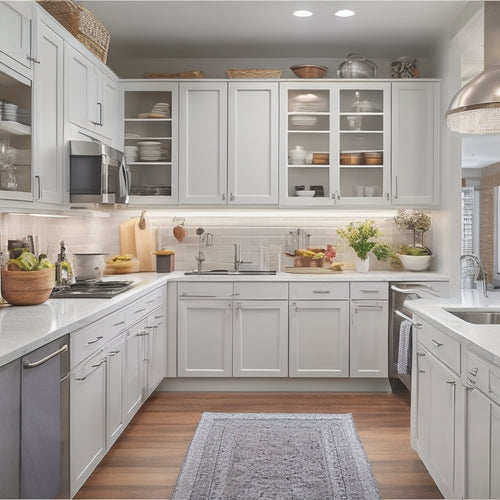
Why Narrow Kitchens Need Space-Saving Solutions
In your narrow kitchen, every inch is precious real estate. You know how quickly clutter can take over, making meal p...
