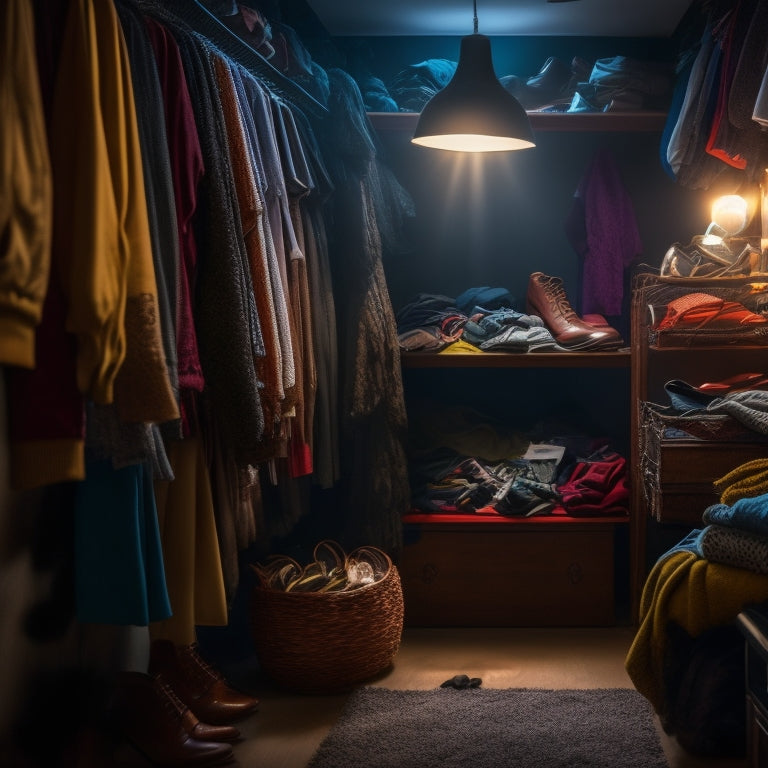
What's Hiding in Your Cluttered Closet?
You know the chaos that lies within your cluttered closet - dust bunnies, forgotten garments, and tripping hazards await. But did you know that pests, mold, and mildew might also be lurking in the shadows? Clutter can even trigger allergies and contribute to anxiety. It's time to confront the hidden dangers and take control. By tackling that clutter, you'll not only create a peaceful space, but also discover the benefits of a minimalist wardrobe and clever storage solutions. As you begin to clean and organize, you'll uncover more surprises - and opportunities to transform your closet into a haven of calm and functionality.
Key Takeaways
• Tripping hazards, safety risks, and pests infestation may be lurking in your cluttered closet, threatening your well-being and peace of mind.
• Dust, mold, and mildew in cluttered closets can trigger allergies and respiratory issues, compromising your health and quality of life.
• A cluttered closet can be a breeding ground for anxiety, making it difficult to focus and make decisions about what to wear or keep.
• Hidden dangers like expired or worn-out items, broken accessories, and forgotten treasures may be hiding in your closet, waiting to be discovered.
• By decluttering and organizing your closet, you can uncover hidden space, reduce stress, and create a peaceful sanctuary that sparks joy and confidence.
Hidden Dangers of Cluttered Closets
Hidden Dangers of Cluttered Closets
Lurking behind the piles of discarded clothes and forgotten shoes in your cluttered closet are hidden dangers that can negatively impact your physical and mental well-being. You might think it's just a mess, but beware - hidden hazards are lurking in every corner, waiting to strike.
From tripping over clutter to getting stuck in a jammed drawer, safety risks are real and can lead to injuries. Not to mention the mental toll of feeling overwhelmed and anxious every time you open the door.
Dust bunnies, mold, and mildew can trigger allergies and respiratory issues, making it hard to breathe. And let's not forget about pests like moths, silverfish, and even rodents that can infest your closet, ruining your belongings and leaving behind unwanted 'gifts'. The thought of it's enough to make you shudder!
It's time to face the music and tackle that closet clutter. By doing so, you'll not only avoid these hidden hazards but also create a peaceful and organized space that makes you feel good. So, take a deep breath and get ready to conquer that closet chaos!
Closet Organization Myth-Busting
Debunking common closet organization myths is essential to creating a functional and peaceful space that you'll actually maintain. Let's face it, you've probably fallen victim to a few of these myths yourself.
Like the idea that a cluttered closet is just a sign of a busy life, or that you need a ton of storage solutions to keep your clothes organized. But the truth is, closet clutter psychology says that a cluttered closet can actually contribute to feelings of anxiety and overwhelm.
It's time to bust these myths and get real about what you really need.
Take, for example, the idea that you need a huge wardrobe to be fashionable. Not true! A minimalist wardrobe can actually be a huge benefit, saving you time, money, and stress in the long run.
By paring down your wardrobe to only the essentials, you'll be able to see what you have, find what you need quickly, and even discover new outfit combinations.
Common Closet Storage Mistakes
As you're organizing your closet, you're likely making a few common mistakes that are holding you back from achieving the serene space you desire.
You're probably guilty of overcrowding your shelves, neglecting the valuable real estate in the corners, and stuffing your drawers to the brim.
Let's take a closer look at these common closet storage mistakes, including Cluttered Shelf Syndrome, Forgotten Corner Spaces, and Overstuffed Drawer Disaster, to identify where you can improve.
Cluttered Shelf Syndrome
What's preventing you from finding what you need in your closet is likely a cluttered shelf, where items are stacked haphazardly, making it impossible to identify what's stored there. It's like digging through a treasure chest, except instead of gold and jewels, you're searching for that one sweater you know you have somewhere.
Here are a few signs you're suffering from Cluttered Shelf Syndrome:
-
Stacks of boxes: You've got boxes stacked on top of each other, with no clear label or organization.
-
Mysterious piles: You've got piles of clothes, accessories, or who-knows-what, with no rhyme or reason to their existence.
-
Dusty forgotten items: You've got items collecting dust, because they're buried so deep you've forgotten they're even there.
Don't worry, friend! Cluttered Shelf Syndrome is treatable with a few simple decluttering tips and space-saving hacks. By implementing some cluttered shelf solutions, you can turn your closet into a serene and organized oasis.
Take the first step towards a closet clean up and start digging out from under that clutter today!
Forgotten Corner Spaces
You're overlooking valuable storage space by neglecting the often-wasted corners of your closet. These forgotten nooks are perfect for stashing hidden treasures and implementing clever storage solutions. Take a closer look at the corners of your closet and you'll likely find:
| Corner Type | Storage Potential | Ideas |
|---|---|---|
| Dead Space | 3-4 shelves | Store out-of-season clothing, linens, or accessories |
| L-Shaped | 2-3 baskets | Keep items like hats, scarves, or bags organized |
| Angled | 1-2 hooks | Hang belts, bags, or accessories to free up floor space |
| Curved | 1-2 cubbies | Store shoes, books, or folded items like blankets |
Overstuffed Drawer Disaster
Cluttered drawers can sabotage even the most organized closet, wasting valuable space and making it difficult to find what you need in a hurry. You might think you're doing okay, but one day you'll be digging through a drawer, and suddenly you're face-to-face with a tangled mess of last season's sweaters and yesterday's socks. Not fun.
Here's what's lurking in your overstuffed drawer:
-
The sweater graveyard: where your favorite winter sweaters go to die, tangled and forgotten among the mess.
-
The sock singularity: where lone socks disappear, never to be seen again, leaving their mates to wander lonely in the drawer.
-
The accessories abyss: where belts, hats, and scarves get sucked into a black hole, never to resurface.
To avoid this drawer disaster, try using drawer dividers to separate your clothes into categories. Implement a clothing rotation to guarantee you're not holding onto items that no longer serve you. By doing so, you'll be able to find what you need quickly and easily, saving you time and sanity.
Decluttering Strategies for Success
Now that you've identified the common closet storage mistakes, it's time to take control of your closet's clutter.
You'll need to sort and purge items that no longer serve a purpose, and create a storage plan that makes sense for your lifestyle.
Sort and Purge Items
As you stand in front of your closet, prepare to tackle the challenging task of sorting and purging items by creating three piles: keep, donate/sell, and discard. This pivotal step in your closet cleanout will set the stage for a more organized and peaceful space. Be ruthless – if you haven't worn it in the past year, it's probably safe to let it go.
Here are a few items you might find in each pile:
- Keep:
- Your favorite little black dress
- That cozy sweater you wear every winter
- Those reliable jeans that always make you feel confident
- Donate/Sell:
- Gently used items that are still in great condition
- A barely worn pair of shoes
- A stylish top that just didn't suit your style
- Discard:
- That worn-out t-shirt from college
- The poorly fitting pants you've been meaning to alter
- The shoes with broken heels
Create a Storage Plan
You've purged your closet of unwanted items, and now it's time to think strategically about how to store what's left, ensuring everything has a designated place and can be easily accessed. It's all about creating a storage plan that maximizes your closet's potential, even if it's a tiny space.
Start by evaluating your storage needs: what do you need to store, and how often will you use it? Consider investing in multi-functional storage solutions, like shelves with built-in drawers or hanging rods with built-in shoe racks, to make the most of your closet's real estate.
Next, think about your closet layout and how you can optimize it for efficiency. Can you create a 'launching pad' near the door for your daily essentials, like a hook for your keys and a tray for your wallet? Maybe you can designate a specific area for your favorite dresses or a section for your out-of-season clothes.
Maximizing Closet Storage Space
By purging your closet of items you no longer need or use, you can release hidden storage space and create a more organized, functional area.
Now it's time to maximize that space with some clever storage solutions.
Here are three essentials to get you started:
-
Double Rods: Installing double rods will instantly double your hanging space, allowing you to store more items without overcrowding the closet.
-
Shelves with Baskets: Adding shelves with baskets or bins will keep folded items, accessories, and shoes organized and out of sight, creating a sense of calm in your closet.
-
Over-the-Door Storage: Take advantage of the often-wasted space on the back of your closet door with over-the-door storage racks, hooks, or pockets. These will keep belts, scarves, and bags organized and easily accessible.
DIY Closet Organization Hacks
Incorporating creative DIY hacks into your closet organization system can transform the space into a haven of efficiency and style. You don't need to break the bank to achieve a clutter-free closet. With a little creativity, you can repurpose items you already have or grab some affordable materials from your local hardware store.
For instance, use DIY shelf dividers made from cardboard or fabric to separate your clothes and keep them from getting jumbled. Get creative with hanger solutions, like using binder clips to hang belts or scarves, or attach a shoe organizer to the back of a door to maximize vertical space.
Don't forget about shoe rack ideas! You can upcycle an old bookshelf or crate to store your shoes, or use hanging organizers like shoe bags or pockets to keep them organized and out of the way. With a few simple hacks, you can turn your closet into a space that sparks joy and makes your daily routine a breeze.
Custom Closet Design Essentials
To create a truly functional and personalized closet space, start by assessing your specific needs and preferences, then tailor your design around them. Ponder your daily routine, the types of clothes you wear, and the accessories you need to store. This will help you determine the most efficient closet layout for your space.
Here are three must-haves to ponder:
-
Double rods for maximum storage: Double the rods, double the fun! Okay, maybe not fun, but you'll definitely have more space to hang your clothes.
-
Shelves for folded items: Keep your folded clothes organized and easy to access with sturdy shelves that can hold a decent amount of weight.
-
A designated spot for shoes: No more digging around for that one missing shoe! A designated shoe station will keep your footwear organized and prevent clutter from building up.
When it comes to functional accessories, think about what'll make your life easier. Do you need hooks for belts or hats? A jewelry organizer? A mirror? By incorporating these essentials into your design, you'll be well on your way to a closet that's both beautiful and functional.
Essential Closet Storage Products
You'll need a range of clever storage products to maximize your closet's potential and keep clutter at bay. Think of them as the ultimate superheroes of the closet world!
From shelves and drawers to bins and baskets, these storage solutions will help you corral your belongings and keep them within easy reach.
Some closet essentials you shouldn't skip include stackable shelves for folded items, hanging organizers for maximizing vertical space, and drawer dividers for separating delicates from everyday wear.
Don't forget about shoe racks, hooks, and bins for stashing accessories and miscellaneous items. With these products, you'll be able to create a customized storage system that works wonders for your unique closet needs.
Maintaining Your Organized Closet
Your newly organized closet demands regular upkeep to maintain its clutter-free status. Think of it as a delicate flower that needs constant nurturing to thrive. Without regular maintenance, your closet can quickly revert to its former cluttered state, and all your hard work will be for nothing.
Here are three ways to keep your closet organized:
-
Schedule regular tidying sessions: Set aside 15 minutes each week to put away items that are out of place and make sure everything is still organized.
-
Implement closet color coding: Organize your clothes by type, season, or color to create a visually pleasing and easy-to-navigate space.
-
Utilize shoe storage solutions: Invest in shoe racks or bins to keep your shoes organized and prevent them from getting scattered all over the floor.
Frequently Asked Questions
Can I Use a Closet Organizer System With Slanted or Angled Ceilings?
You can totally use a closet organizer system with sloped ceilings! Look for adjustable shelves and storage solutions designed specifically for angled ceilings, and you'll be maximizing your quirky space in no time!
How Do I Organize a Closet With Very Little Natural Light?
You're stuck with a dimly lit closet, huh? Don't worry! You'll find ways to brighten it up with clever lighting solutions, like LED strips or shelves with built-in lights, and space-saving strategies, like double rods and stackable bins, to maximize that dark space.
What Is the Ideal Shelf Height for Folded Clothing Storage?
When designing your closet layout, you'll want shelves for folded clothing storage at a comfortable height, ideally around 60-70 inches, allowing you to easily retrieve and store items without straining, ensuring a smooth clothing organization experience.
Can I Use Fabric Bins With Mothball-Scented Sachets for Storage?
As you set off on a journey for neat serenity, you're wondering if fabric bins with mothball-scented sachets can be your trusted sidekicks. Good news: yes, they can! These aromatic storage solutions are a breeze of fresh, keeping pests at bay while maintaining closet organization.
Do I Need to Remove Walls to Install a Custom Closet System?
You're considering a closet renovation, but wondering if you'll need to tear down walls for a custom system. Fear not, friend! You've got space-saving solutions with professional installation or DIY options, so breathe easy and get ready to maximize that closet real estate!
Related Posts
-

Why Cluttered Spaces Hold You Back From Productivity
You're struggling to get things done amidst the chaos of your cluttered space. It's not just a physical mess - it's m...
-

Space-Saving Kitchen Design Ideas
You can change your cramped kitchen into a sleek, efficient space where every inch counts. Start by optimizing your w...

