
Organizing Hacks for ADHD: Simplify Your Space
You're ready to simplify your space and take control of your clutter. Start by breaking down tasks into manageable chunks, using the Pomodoro Technique to stay focused. Sort items into categories, and consider digitizing paper clutter to free up physical space. Create a functional workspace with ergonomic essentials and personalized decor. From there, tackle kitchen storage, toy organization, and closet systems one step at a time. By implementing these strategies, you'll be well on your way to a more organized, stress-free life. Now, get ready to dive deeper into the world of organizing hacks tailored specifically for ADHD brains.
Key Takeaways
• Break down decluttering tasks into smaller chunks and allocate specific time slots to maintain focus and avoid overwhelm.
• Implement the Pomodoro Technique, working in focused 25-minute increments, followed by a 5-minute break to stay on track.
• Sort items into categories like 'keep,' 'donate,' and 'recycle' to simplify decision-making and reduce decision fatigue.
• Designate a "launching pad" near the entrance of your home to corral essential items like keys, wallets, and bags, reducing morning chaos.
• Use color-coding and labeling systems to create visual cues, making it easier to identify and access items, even in cluttered spaces.
Decluttering Strategies for ADHD Brains
You can start decluttering your space by tackling one area at a time, like your desk or a single shelf, to help your ADHD brain focus on a manageable task. Break it down into smaller chunks, and allocate specific time slots for each task - this is key to effective time management. Set a timer for 25 minutes, declutter as much as you can, and take a 5-minute break. This technique is called the Pomodoro Technique, and it's a game-changer for ADHD brains.
Next, sort items into categories, like 'keep,' 'donate,' and 'recycle.' Be ruthless - if you haven't used it in the past year, it's probably safe to get rid of it. Consider digitizing paper clutter, like receipts and documents, to free up physical space and reduce stress. Digital organization tools like cloud storage and apps can help you stay on top of your paperwork and keep your space tidy.
Creating a Functional Home Office
With your newly decluttered space, it's time to transform it into a functional home office that boosts your productivity and helps you stay focused.
You've got a clean slate, now let's get practical! Set up an ergonomic setup that makes you feel like a boss. Invest in a comfy chair, a standing desk, or a laptop stand that lets you switch between sitting and standing throughout the day. Don't forget task lighting – it's a game-changer for reducing eye strain and increasing focus.
Now, add some personality to your space with personalized decor. Hang up some fun art, add a few plants, or display your favorite mementos. This is your sanctuary, after all!
Next, tackle tech organization. Invest in a cord organizer, a wireless charging pad, and a sleek desk organizer to keep your workspace tidy. You'll be amazed at how much more focused you'll be when you're not drowning in cords and clutter.
With these tweaks, you'll be well on your way to creating a home office that's both functional and fabulous. Happy organizing!
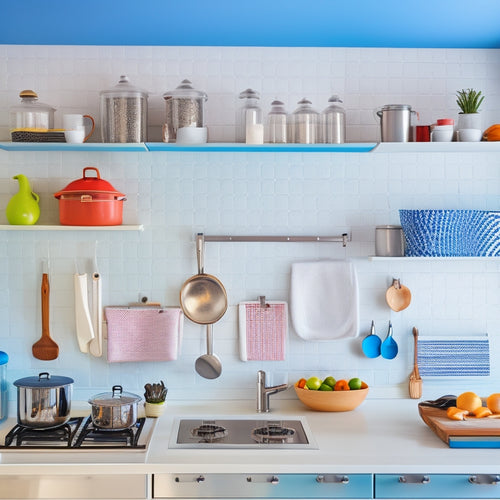
Simplifying Kitchen Storage Spaces
When you're living with ADHD, a cluttered kitchen can be overwhelming. You know it's time to simplify your kitchen storage spaces when you're struggling to find what you need or when meal prep feels like a challenging task.
Declutter Countertop Clutter
Every inch of countertop real estate is precious, so prioritizing what stays out and what gets stored away is essential. When you're dealing with ADHD, a cluttered countertop can be overwhelming and make it difficult to focus on meal prep or cooking.
Start by tackling mail piles and sorting them into designated bins or folders. This will help clear up space and reduce visual overwhelm.
Next, take a hard look at the items you've got scattered across your countertops. Be honest with yourself – do you really need that many coffee mugs or kitchen gadgets out at all times? Probably not. Here are three items to contemplate storing away:
-
Infrequently used kitchen gadgets: If you haven't used it in the past month, it's probably safe to store it in a cabinet or on a high shelf.
-
Extra coffee mugs: Pick your favorite few and store the rest in a cabinet or on a mug tree.
-
Cookbooks or recipe printouts: Reflect on digitizing your recipes or storing cookbooks on a bookshelf to free up counter space.
Optimize Cabinet Space
You can maximize your cabinet space by categorizing items into zones, such as baking, cooking, or food storage, and assigning a specific cabinet to each zone. This way, you'll know exactly where to find what you need, and you'll avoid the chaos of rummaging through multiple cabinets.
For instance, designate a cabinet for your pantry organization, where you can store dry goods, spices, and snacks. Use space saving solutions like baskets, bins, or shelves to keep items off the floor and make the most of your vertical space.
When it comes to cabinet organization, think vertically. Install shelves or hooks to maximize storage and keep frequently used items within easy reach. Consider a lazy Susan for corner cabinets to make the most of that often-wasted space.
By implementing these strategies, you'll be able to find what you need in a snap, and you'll reduce the likelihood of clutter building up again. Remember, the key to maintaining your newly organized cabinet space is to put things back in their assigned zone after use.
With a little discipline and creativity, you can keep your kitchen cabinets clutter-free and functional.
Mastering the Art of Toy Organization
How do toys seem to multiply and sprawl out of control, making it impossible to find what you need in the chaos? You're not alone! Toy organization can be a challenging task, especially when you have ADHD. But fear not, friend! With a few simple strategies, you can tame the toy beast and restore sanity to your playroom.
Here are three essential tips to get you started:
-
Implement a toy rotation: Divide toys into categories and store them in labeled bins. Rotate the bins every few weeks to keep things fresh and exciting.
-
Create a labeling system: Use colorful labels and signs to identify where toys belong. This visual cue will help you and your kids quickly find what they need.
-
Optimize your playroom layout: Designate zones for different activities, like building, art, and reading. This will encourage focused play and reduce clutter.
Streamlining Your Closet System
Cluttered closets can be a major source of stress, but by implementing a few simple strategies, they can become a haven of organization and calm. You're about to breathe a sigh of relief!
Start by embracing the power of color coding. Group similar items together, like all your blue tops or black pants, and store them in matching bins or baskets. This visual system helps your ADHD brain quickly identify what you need.
Next, invest in space-saving, modular systems like stackable shelves or hanging organizers. These will help maximize your closet's storage capacity without overwhelming you.
Implement a seasonal rotation to keep your closet fresh and relevant. Store out-of-season clothes in labeled bins or containers, and swap them out when the seasons change. This trick prevents decision fatigue and keeps your closet feeling curated.
Managing Paper Clutter Effectively
When it comes to managing paper clutter, you're probably no stranger to feeling overwhelmed.
To get started, you'll need to sort and purge papers, getting rid of anything unnecessary or outdated.
Sort and Purge Papers
Get ready to tackle the paper jungle by categorizing your documents into three piles: keep, toss, and delegate. This simple step will help you regain control over your space and reduce stress. Be ruthless – if you don't need it, toss it! Consider paper shredding for sensitive documents and recycling for the rest.
Here are three essential tips to keep in mind:
-
File organization is key: Create a system that works for you, whether it's color-coded folders or a digital filing system. This will help you quickly locate the documents you need.
-
Digital scanning is your friend: Scan important documents and save them to the cloud or an external hard drive. This will free up physical space and reduce clutter.
-
Keep only what's necessary: Be honest with yourself – do you really need that receipt from 2018? If not, toss it! By keeping only what's necessary, you'll reduce clutter and make your life easier.
Designate a Landing Spot
Designate a specific spot near the entrance of your home or office as a 'landing strip' where you'll place all incoming papers, allowing you to process them quickly and efficiently. This designated zone will become your go-to spot for entryway organization, helping you stay on top of paperwork chaos.
Think of it as a mini command center where you can corral your mail, keys, and other essential items. Install a mail sorter or a key holder nearby to keep everything within arm's reach. This way, you'll avoid the stress of searching for misplaced documents or wasting time rummaging through cluttered surfaces.
Designing a Peaceful Living Room
Create a soothing atmosphere in your living room by incorporating calming colors, textures, and furniture arrangements that promote relaxation and reduce visual clutter. You know, the kind of space where you can finally exhale and let your ADHD brain take a breather.
Here are three essential tips to get you started:
-
Choose a calming color scheme: Ditch the bright red walls and opt for softer hues like beige, blue, or green. These colors can help reduce anxiety and promote relaxation.
-
Rethink your furniture placement: Avoid cluttering the room with too much furniture. Instead, create a cozy conversation circle and leave some breathing room between pieces.
-
Add textures for depth: Mix different textures like velvet, wood, and linen to add depth and visual interest to the space. This will help distract from any remaining clutter and create a sense of calm.
Optimizing Bathroom Storage Solutions
When you're getting ready in the morning, you need a bathroom that's functional and stress-free.
To achieve this, you'll want to focus on strategic placement of essential items, making the most of your cabinet space, and clearing clutter from your countertops.
Essential Item Placement
You'll save time and reduce stress by placing essential bathroom items like toiletries, towels, and medications in easy-to-reach locations. This is especially important for individuals with ADHD, who may struggle with forgetfulness or get easily distracted. By keeping must-haves within arm's reach, you'll avoid the frustration of searching for them when you need them most.
Here are three essential items to prioritize in your bathroom layout:
-
Toiletries: Place toothbrush, toothpaste, and any medications you take daily near the sink, so they're the first things you see when you walk in.
-
Towels: Store clean towels within easy reach of the shower or bathtub to avoid dripping water all over the floor.
-
Hair accessories: Designate a spot near the mirror for hairbrushes, combs, and styling tools to keep them organized and prevent clutter.
When arranging your furniture and storage solutions, remember to balance functional layout with decorative accents. A well-organized bathroom should be both stylish and practical. By keeping essential items in easy-to-reach locations, you'll create a space that works with your ADHD brain, not against it.
Efficient Cabinet Use
Maximize your bathroom's storage potential by assigning a home for each item within your cabinets, ensuring everything has a designated spot to prevent clutter from building up. This is especially important for individuals with ADHD, as a cluttered space can exacerbate symptoms.
To optimize your cabinet storage, implement a labeling system and color code categories to create visual distinction. This will help you quickly identify where items are stored, reducing time spent searching for misplaced essentials.
Here's a suggested categorization system:
| Category | Label Color | Storage Location |
|---|---|---|
| Skincare | Pink | Top Shelf |
| Haircare | Blue | Middle Shelf |
| Medications | Yellow | Bottom Shelf |
| Makeup | Purple | Hidden Drawer |
Streamlined Counter Space
By paring down clutter and strategically placing essential items on your bathroom counter, you're creating a sense of calm and control that helps you stay focused. It's time to ditch the chaos and embrace a more minimalist decor that lets your brain breathe.
Efficient appliance arrangement is key to maximizing your counter space. Here are three simple tips to get you started:
-
Designate a 'launching pad': Choose a specific spot on your counter for your daily essentials, like toothbrush, toothpaste, and hairbrush. This keeps them easily accessible and prevents clutter from building up.
-
Group similar items together: Store all your skincare products in one area, and your hairstyling tools in another. This creates a sense of order and makes it easier to find what you need.
-
Utilize vertical space: Install a shelf or a basket above your counter to store less frequently used items, like extra toilet paper or towels. This keeps them out of the way but still accessible.
Building a Productive Laundry Routine
Sort laundry into whites, colors, and delicates as soon as it's dirty to prevent mixed-up loads and save time in the long run. This simple habit will become your new BFF when it comes to doing laundry. Designate a specific laundry basket for each type to keep them separate and organized. When it's time to wash, grab the corresponding basket and you're good to go!
Folding techniques can make a huge difference in storage solutions. Try the 'KonMari fold' or the 'military fold' to keep your clothes compact and easy to store. Assign a specific shelf or drawer for each type of clothing, and use dividers to keep them separated. This will prevent clutter from building up and make it easier to find what you need.
Crafting a Cozy and Organized Bedroom
Create a peaceful retreat in your bedroom by designating a specific spot for everything, from your favorite books to your cozy throw blankets. This will help you relax and unwind, which is essential for a good night's sleep.
To take it to the next level, consider these three must-haves for a cozy and organized bedroom:
-
Cozy lighting: Ditch the harsh overhead lights and opt for table lamps or string lights instead. This will create a warm and inviting ambiance that'll make you want to snuggle up with a good book.
-
Efficient storage: Invest in a bed with built-in storage or use under-bed containers to stash away out-of-season clothes or linens. This will keep your floor clear and make it easier to find what you need.
-
Calming colors: Choose a soothing color scheme like soft blues, greens, or neutral tones to promote relaxation. Avoid bold patterns and bright colors that can stimulate your brain and make it harder to wind down.
Frequently Asked Questions
Can I Still Keep Sentimental Items if I Have Adhd?
You can keep sentimental items, but be honest, do you really need that worn-out t-shirt from college? Create a "maybe" box, and if you don't revisit the item in a few months, it's time to let go and focus on organization strategies that work for you.
How Do I Maintain Organization Once I've Decluttered?
You've finally tamed the clutter beast, but now it's time to keep it from rising from the ashes! Create a routine, setting aside daily time blocks for maintenance, and form habits that stick, like a morning tidy ritual, to keep your space shipshape.
Are There Any Organization Tools Specifically Designed for Adhd?
You're looking for organization tools that get your ADHD brain? Try ADHD-friendly planners with visual cues and color-coded storage bins that make categorizing a breeze - they're designed to help you stay on track and in control!
Can ADHD Organization Strategies Be Adapted for Small Spaces?
You can totally adapt ADHD organization strategies for small spaces! You're maximizing storage by using multi-functional furniture and utilizing vertical space with shelves and hooks, making the most of every inch - and your sanity!
How Often Should I Review and Adjust My Organizational Systems?
'Are you tired of feeling like your organizational systems are failing you? You should review and adjust them regularly, like every 3-6 months, to confirm they're still working for you - it's all about time management and consistency checks, baby!'
Related Posts
-

Can I Put a Car Lift in My 10-Foot Garage?
Can I Fit a Car Lift in My 10-Foot Garage? The Ultimate Guide Hey there, garage enthusiasts! If you're like me, yo...
-
10 Essential Tips to Organize Your Compact Kitchen
You're about to change your compact kitchen into a highly functional and organized space that makes meal prep a breez...
