
Build Custom Closet Shelving Units With Rods Easily
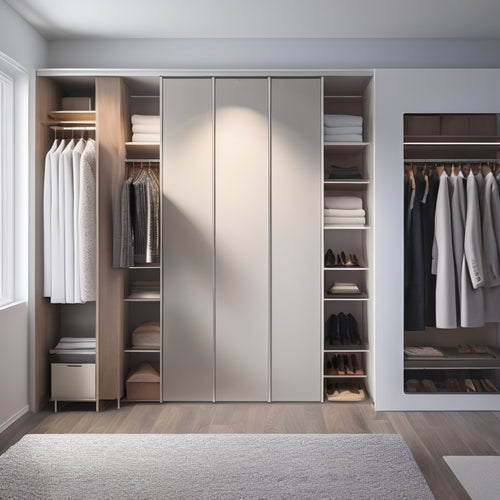
You can build a custom closet shelving unit with rods easily by following a step-by-step approach. Start by evaluating your closet space and storage needs, then choose the right shelving materials and design your unit for functionality. Next, construct the shelving frame structure accurately and install rods and shelves properly. Consider adding drawers, baskets, and accessories like shoe racks and valet rods for enhanced organization. Finally, focus on maximizing storage capacity by identifying areas for improvement and strategically planning space allocation. Now, get ready to create a functional and organized closet space that meets your specific needs.
Key Takeaways
• Assess closet space and storage needs to determine the ideal shelving design and rod placement for easy accessibility.
• Choose suitable shelving materials, such as wood or MDF, that fit your budget and desired aesthetic.
• Measure and design the shelving unit to incorporate rods, drawers, and unique features that cater to your specific storage needs.
• Construct the shelving frame structure accurately, ensuring level and straight shelves, and properly install rods for hanging clothes.
• Double-check measurements and layout components before final assembly to ensure a seamless and stress-free installation process.
Assessing Closet Space and Needs
Measure your closet's dimensions and identify the types of items you need to store to determine the best configuration of your custom closet shelving unit with rods. This is the foundation of effective closet organization and space planning.
Don't skip this step, or you'll end up with a shelving unit that's as useful as a chocolate teapot. Take out your trusty tape measure and jot down the width, height, and depth of your closet.
Consider the types of items you need to store, such as clothes, shoes, accessories, and storage bins. Think about how you want to group similar items together and how you want to access them.
Do you need shelves for folded items, rods for hanging clothes, or bins for storing seasonal items? Make a list of your must-haves and nice-to-haves to guide your design decisions.
With a clear understanding of your closet's dimensions and storage needs, you'll be able to create a custom shelving unit that's tailored to your unique requirements.
Choosing Right Shelving Materials
When selecting shelving materials for your custom closet, you'll need to take into account factors like durability, aesthetics, and budget.
You'll have to choose from a range of options, including wood, metal, and engineered wood products.
Shelving Material Options
When it comes to shelving materials, there are plenty of options to choose from! From durable woods like oak and maple to elegant metals like aluminum and steel, the selection can be overwhelming. But fear not, we've got you supported.
Consider unique finishes to add a personal touch to your shelving unit. A weathered wood finish can bring a charming rustic feel, while a shiny metal finish can give your closet a contemporary touch.
Metal brackets are also a solid choice, offering durability and support to your shelving unit. Additionally, they're available in various styles and finishes to match your closet's style. Whether you prefer a simple aesthetic or a bold statement, the appropriate shelving material can make a significant impact.
Types of Shelving Boards
By pondering the load-bearing capacity, durability, and aesthetic appeal you want to achieve, you can narrow down the wide array of shelving board options to find the perfect fit for your custom closet shelving unit.
You'll want to ponder the weight of the items you'll be storing, as well as the overall style and vibe you're aiming for.
For instance, if you're planning to store heavy items like bulky sweaters or stacks of books, you'll want to opt for thicker, more durable shelving boards.
Conversely, if you're aiming for a sleek, minimalist look, thinner boards with a smooth finish might be the way to go.
Shelving board finishes range from rustic wood grain to sleek metal or glass, so you're sure to find an option that fits your unique style.
And don't forget to ponder rod length options - you'll want to ensure your rods are long enough to accommodate your hanging items, but not so long that they get in the way of your shelving space.
With a little planning and pondering, you'll be well on your way to creating the custom closet shelving unit of your dreams!
Measuring and Designing Your Unit
Measure your closet space carefully to determine the maximum dimensions for your custom shelving unit, taking into account any obstructions, such as plumbing, electrical outlets, or windows. Don't forget to note the location of any anchors, like studs, that you'll need to attach your shelving to. When measuring, remember to check for any sloping floors or ceilings that might affect your design.
For Measuring Tips, use a laser level to ensure accuracy and a tape measure to record your dimensions. Take multiple measurements to double-check your numbers, and don't hesitate to consult a friend or family member if you're unsure.
Now, it's time to start Designing Techniques. Sketch out your design, considering the items you want to store and how you want to access them. Think about the type of shelving you need, such as adjustable or fixed, and the material you'll use. Don't be afraid to get creative and add unique features, like a built-in drawer or hanging rod. Just remember to keep your design functional and tailored to your needs.
With precise measurements and a solid design, you'll be well on your way to building a custom closet shelving unit that's both stylish and functional.
Building Shelving Frame Structure
With your design finalized, begin constructing the shelving frame structure by cutting the vertical side panels to the determined height, using a miter saw or a circular saw to guarantee precise angled cuts. Next, cut the horizontal shelves and top/bottom panels according to your design specifications.
| Component | Cutting Instructions |
|---|---|
| Vertical Side Panels | Cut to determined height with precise angled cuts |
| Horizontal Shelves | Cut to specified length and width |
| Top/Bottom Panels | Cut to specified length and width |
| Back Panel | Cut to specified height and width |
| Shelf Supports | Cut to specified length and width |
Installing Rods and Shelves Properly
When installing rods and shelves, you'll need to think about the placement of rods to make sure they're functional and accessible, taking into consideration the type of clothing you'll be storing and the overall flow of your closet.
You'll also need to choose a shelf support system that can handle the weight of your stored items, whether that's a fixed bracket or an adjustable system.
Rod Placement Considerations
You'll want to position rods at a comfortable height to maximize storage capacity and ease of use. This will make sure you can easily hang and retrieve clothes without straining or struggling. Consider the type of items you'll be storing, such as dresses, shirts, or pants, and adjust the rod height accordingly.
When it comes to rod placement, keep the following in mind:
-
Rod spacing: Leave enough space between rods to accommodate bulky items like winter coats or blankets. Aim for at least 12 inches of clearance to prevent overcrowding.
-
Rod durability: Choose rods that can support the weight of your stored items. Look for sturdy, rust-resistant materials that can endure daily use.
-
Aesthetics: Consider the style and finish of your rods to make sure they match your closet's overall design. From sleek and modern to rustic and traditional, there's a rod style to suit your taste.
Shelf Support Systems
By designing a sturdy shelf support system, you can guarantee that your rods and shelves remain stable and secure, even when loaded with heavy items. This is where the magic happens, folks! A well-planned support system is the backbone of a functional and organized closet.
Start by installing rod brackets, making sure they're spaced evenly and securely attached to the wall. For added stability, consider using adjustable brackets that can be tweaked as needed.
When it comes to shelves, use slats or brackets to create a solid foundation. You can also add supports between shelves to prevent sagging. Remember, a sturdy shelf is a happy shelf!
Closet organization tips: use vertical space to maximize storage, and consider adding a shelf divider to keep items from getting jumbled. With a solid support system in place, you can focus on the fun part – styling your closet with your favorite clothes and accessories.
Adding Drawers and Baskets Options
Customizing your closet shelving unit with drawers and baskets allows you to maximize storage capacity and maintain a clutter-free space. By incorporating these features, you'll be able to keep your belongings organized and easily accessible. It's time to say goodbye to cluttered floors and hello to a serene closet oasis!
Here are some benefits of adding drawers and baskets to your custom closet shelving unit:
-
Optimized drawer organization: With customizable drawer sizes and configurations, you can store everything from socks to sweaters in a logical and organized manner.
-
Basket storage for accessories: Add wicker or fabric baskets to store items like hats, scarves, and belts, keeping them visible and accessible.
-
Increased space utilization: By incorporating drawers and baskets, you can make the most of your closet's vertical space, ensuring that every inch is used efficiently.
Incorporating Accessories and Features
Your custom closet shelving unit can be further enhanced with accessories and features that cater to your specific needs and preferences. You've got the basics covered, now it's time to get fancy!
Consider adding shelves with built-in shoe racks or cubbies for storing bags and accessories. You can also integrate drawers or baskets for a more organized look. Rod placement is essential, so think about adding double rods for maximizing storage or a single rod with a valet rod for hanging belts and scarves.
When it comes to accessory integration, the possibilities are endless. You can add hooks for hanging belts, hats, or bags, or install a jewelry organizer for a clutter-free zone. If you're a shoe enthusiast, consider adding a shoe fence or a slanted shelf for showcasing your favorite kicks.
Final Assembly and Installation Tips
Now that you've selected the perfect accessories and features for your custom closet shelving unit, it's time to bring everything together with a successful assembly and installation. This is the final stretch, and with these installation tips, you'll be enjoying your new closet in no time!
Before you start assembling, double-check your measurements to make sure everything fits together seamlessly. It's also a good idea to lay out all the components and hardware to avoid missing any important pieces.
Here are some additional tips to keep in mind:
-
Use a level to confirm your shelves are straight and level, and don't be afraid to ask for help if you need it.
-
Consider adding organizers like bins, baskets, or hooks to maximize your space and keep clutter at bay.
-
Take your time and work methodically to avoid mistakes, and don't hesitate to consult the instructions if you're unsure about anything.
Maximizing Closet Storage Capacity
To optimize your closet's storage capacity, identify the areas that require the most organization, such as shelves, rods, and corners, and allocate space accordingly.
You'll be amazed at how much more you can fit in your closet with some strategic planning. Consider implementing double rods to double your hanging space, and install shelves with built-in cubbies for folded items.
Don't forget to utilize those pesky corners with carousel shelves or baskets that spin to bring items to you.
Frequently Asked Questions
Can I Use MDF Boards for Building Custom Closet Shelving Units?
"You can definitely use MDF boards for custom shelving, but consider durability needs; while they're cost-effective, they may not withstand heavy loads. Design-wise, MDF's smooth surface is perfect for a sleek, modern aesthetic, but it's not ideal for high-traffic closets."
How Do I Ensure the Shelving Unit Is Level During Installation?
'You're about to become a master leveler! Don't let wonky shelves ruin your custom closet dreams. Grab your trusty level, a laser level, and a bubble level (yes, all three!) to guarantee a precision leveling process during installation - it's a three-tool party!'
What Is the Ideal Shelf Thickness for Holding Heavy Clothing Items?
When selecting shelf thickness, you'll want to prioritize shelf stability for holding heavy clothing items, ensuring weight distribution is even and rod placement is secure, thereby maintaining best closet organization and avoiding a fashion fiasco.
Can I Install Closet Shelving Units in a Rental Property?
If you're renting, you're probably wondering if you can install closet shelving units without losing your security deposit. Fear not, friend! Opt for temporary solutions like removable shelves or storage options that don't damage walls.
How Do I Clean and Maintain the Custom Closet Shelving Unit?
"Are you ready to keep your custom closet shelving unit looking fabulous? You're doing great! For proper cleaning, dust regularly and vacuum those hard-to-reach areas. For long-term maintenance, implement storage solutions and organization tips to keep clutter at bay."
Related Posts
-

10 Essential Online Closet Organization Tips for Beginners
You're about to organize your closet like a pro! Start by setting up a virtual closet using an app or spreadsheet to ...
-
Declutter Your Closet With Digital Essentials
You're about to transform your closet from a cluttered chaos to a curated sanctuary with the power of digital essenti...
-

Creative Solutions for Cabinet Storage Organization
You're sitting on a cache of untapped storage potential, with your cabinets hiding a wealth of creative solutions wai...

